AI + Soft Skills: The Winning Formula for Future-Ready Professionals

From Employee to AI-Enabled Leader: The Skills Every Professional Must Master
August 25, 2026
How to Upskill for the AI Era: A Professional’s Guide to Staying Relevant
August 25, 2026AI + Soft Skills: The Winning Formula for Future-Ready Professionals | Sanjeev Bhutani
The modern workplace is undergoing a seismic shift driven by rapid technological advancements, making the integration of AI + Soft Skills essential for professional success. Artificial intelligence is no longer a futuristic concept confined to research labs; it has become an integral part of everyday business operations. From automating routine administrative tasks to processing vast amounts of data in real time, AI tools are fundamentally altering how work gets done. However, as organizations speed up their adoption of digital transformation, a clear realization is emerging across industries: technological knowledge alone is insufficient to guarantee long-term career resilience.
While learning how to write prompts or leverage machine learning algorithms provides a strong foundational base, true career resilience depends on a human touch. The most effective strategy for thriving in this modern landscape is mastering the powerful integration of AI + Soft Skills.
Machines excel at processing speed, structural automation, and pattern recognition, but they lack empathy, ethical reasoning, context, and emotional nuance. As thought leaders like Sanjeev Bhutani often emphasize, true career longevity is built at the intersection of technological capability and human insight. When professionals learn to fuse advanced technical systems with essential human qualities, they position themselves as high-impact leaders ready to navigate an evolving work environment.
Understanding the AI-Driven Workplace
To succeed in today’s environment, professionals must first understand how artificial intelligence is reshaping the structure of organizations. Automation has shifted from simple physical robotics to cognitive assistance. Today, an AI-powered workplace relies heavily on algorithms to analyze market trends, optimize logistics, draft code, organize marketing materials, and support customer inquiries.
This shift does not mean human roles are disappearing; rather, it means job responsibilities are being redefined. Routine, repetitive tasks—such as manual data entry, preliminary financial reporting, and standard scheduling—are increasingly handled by automated platforms. Consequently, human workers are freed to focus on higher-level strategy, complex problem-solving, and relationship building.
In this updated paradigm, productivity is no longer measured solely by how fast someone completes routine tasks. Instead, value is generated by how effectively a professional uses intelligent tools to enhance their output. Navigating this environment requires understanding how to direct software effectively while using human judgment to evaluate the results.
Why AI Skills Alone Are Not Enough
As technical capabilities become democratized through accessible tools, specialized technical knowledge yields diminishing standalone returns. If anyone can generate a complex report or build a basic software script using automated systems, technical execution by itself stops being a rare competitive advantage.
This reality reveals the clear limitations of relying exclusively on technical expertise:
- Lack of Context: Software operates strictly on available training data and algorithms; it cannot grasp workplace culture, historical context, or nuanced human dynamics.
- Absence of Empathy: Automated models cannot build genuine trust, motivate a discouraged team, or navigate delicate interpersonal conflicts.
- Algorithmic Blind Spots: Automated platforms frequently miss ethical nuances and subtle environmental cues that human decision-makers identify immediately.
Without strong interpersonal capabilities, technical proficiency can lead to cold, misaligned, or tone-deaf outcomes. To bridge the gap between automated generation and real-world execution, professionals must cultivate human-centered capabilities alongside technical skills.
The Most Important Soft Skills in the Age of AI
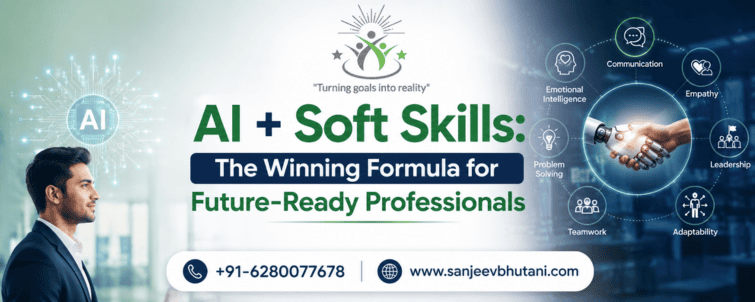
As routine execution moves to automated systems, human-centric competencies become primary career differentiators. Mastering the combination of AI + Soft Skills requires intentional development across several foundational areas:
Communication
Clear, structured communication is essential. Professionals must articulate complex automated insights in simple terms for stakeholders, while also formulating clear, precise instructions for intelligent systems.
Emotional Intelligence
Building strong relationships, demonstrating empathy, understanding non-verbal cues, and managing personal emotions remain uniquely human traits that no technology can replace.
Critical Thinking
Automated tools generate outputs based on probability, not objective truth. Evaluating computational results for accuracy, bias, and practical relevance requires rigorous critical thinking.
Creativity
While software can synthesize existing datasets, genuine human creativity introduces novel concepts, original strategic visions, and out-of-the-box approaches.
Adaptability
As technology evolves rapidly, adaptability ensures professionals remain resilient, open to continuous learning, and willing to pivot their workflows when necessary.
Leadership and Collaboration
Guiding cross-functional teams, inspiring shared visions, managing conflicts, and uniting diverse perspectives require deep personal connections and collaborative leadership.
How AI and Soft Skills Work Together
The concept of AI + Soft Skills is not about choosing between human intuition and machine intelligence; it is about leveraging both simultaneously to yield superior results.
Across various industries, combining technical workflows with interpersonal strengths transforms everyday operations:
- Healthcare: Machine learning models analyze diagnostic images to identify potential anomalies quickly. However, a physician uses emotional intelligence and empathetic communication to explain findings gently to patients and build trusting treatment plans.
- Marketing: Generative tools produce initial copywriting drafts or segment target audiences within seconds. Creative strategists then refine that output, adding regional cultural context, brand authenticity, and emotional depth.
- Project Management: Predictive analytics track schedule risks and budget variances. Project managers draw on communication and conflict-resolution skills to realign team priorities, resolve friction, and keep stakeholders engaged.
By systematically applying AI + Soft Skills, professionals transform technical outputs into strategic value.
AI + Communication: Turning Data Into Action
Data generation has reached an all-time high, but data alone does not drive strategic action. Machines synthesize numbers, compile spreadsheets, and create complex predictive charts, yet executives and clients rarely act on raw data. They act on meaningful narratives.
This reality highlights the importance of combining AI + Soft Skills in everyday workplace communications. A successful professional takes automated reports and extracts the underlying story, connecting numerical trends to practical business goals.
Whether presenting a quarterly strategy to board members, drafting client recommendations, or explaining complex technical changes to cross-functional teams, human communication bridges the gap between raw data generation and informed execution.
AI + Critical Thinking: Making Better Decisions
Automated platforms produce information based on pattern matching across historic data. However, they lack real-world awareness, moral reasoning, and long-term intuition. Relying uncritically on algorithmic recommendations poses serious operational, legal, and reputation risks.
Combining AI + Soft Skills makes critical thinking an indispensable line of defense:
- Fact-Checking & Validation: Automatically generated outputs can contain hallucinations, factual errors, or outdated references that require human verification.
- Evaluating Bias: Historical data often reflects historical biases. Professionals must critically analyze system suggestions to ensure choices remain fair, ethical, and aligned with company values.
- Contextual Nuance: Machine models evaluate inputs literally. Critical thinkers consider broader market environments, economic shifts, and organizational subtleties that software cannot detect.
By applying rigorous critical analysis to computational outputs, professionals ensure organizational decisions remain grounded, ethical, and strategically sound.
AI + Emotional Intelligence: Keeping Work Human
The digital workplace can easily feel clinical, fast-paced, and disconnected. As remote work and digital collaboration tools expand, preserving human connection within organizations becomes increasingly vital.
Emotional intelligence underpins healthy team cultures. Machines cannot comfort a stressed colleague, sense morale shifts, negotiate sensitive organizational compromises, or mentor junior staff.
As Sanjeev Bhutani advocates in discussions on organizational growth, technology should empower professionals rather than isolate them. When leaders combine automated task management with high emotional intelligence, they build trust, encourage psychological safety, and maintain engaged, resilient teams.
AI + Creativity: Building What Machines Cannot
Modern generative tools excel at assembling, summarizing, and reconfiguring pre-existing content. They iterate quickly, but true innovation requires step-change thinking that departs entirely from historical patterns.
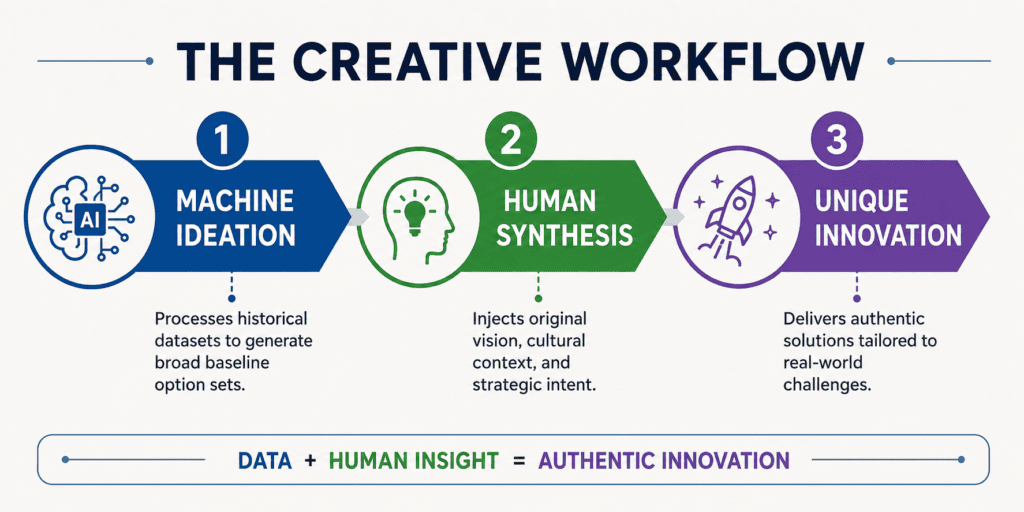
Human creativity provides the essential spark of original vision. Professionals who master AI + Soft Skills view smart tools as collaborative brainstorming partners rather than replacements for human thought. They use computational platforms to handle initial research and basic drafts, applying their creative intuition to refine, customize, and elevate the final output.
How Professionals Can Become Future-Ready
Preparing for the future of work requires an active, ongoing effort to build both technical familiarity and interpersonal mastery.
To build a balanced, resilient skill set, focus on these core growth areas:
- Learn AI Fundamentals: Understand how digital tools operate, learn basic prompt structures, and stay informed on emerging technological capabilities relevant to your sector.
- Practice Prompt Engineering & Tool Usage: Gain hands-on experience using productivity applications, analytical platforms, and software automation tools to speed up routine tasks.
- Sharpen Communication Skills: Practice translating complex technical insights into clear, persuasive summaries for diverse audiences.
- Cultivate Critical Inquiry: Question assumptions, audit machine-generated results for accuracy, and evaluate decisions through an ethical lens.
- Enhance Emotional Intelligence: Focus on active listening, empathy, conflict resolution, and relationship management in every professional interaction.
- Embrace Lifelong Learning: View skill development as a continuous life process rather than a single destination. Adapting gracefully to ongoing technology shifts is essential for career longevity.
The Role of Sanjeev Bhutani in Professional Development
In conversations about modern workforce transformation, Sanjeev Bhutani highlights the importance of balancing technical capabilities with human-centric strengths. Sustainable success does not stem from competing with machine efficiency; it comes from cultivating human-centered skills that technology cannot replicate.
Through a focus on practical continuous learning, sound judgment, and authentic leadership, Sanjeev Bhutani emphasizes that real career growth requires adopting modern digital tools without losing human perspective. By encouraging professionals to pair automated tools with strong ethical leadership and open communication, this balanced mindset helps individuals navigate digital shifts with confidence and clarity.
The Future Belongs to Hybrid Professionals
The ongoing debate surrounding technology in the workplace often focuses on human-versus-machine competition. However, the future of work centers on human-machine collaboration.
The most successful career paths will not belong exclusively to technical specialists or isolated communicators. They will belong to hybrid professionals who bridge both worlds:
| Professional Model | Core Characteristic | Long-Term Outlook |
| Pure Technical Specialist | Focuses solely on tool execution and rigid technical mechanics. | High risk of displacement as tools become automated and simplified. |
| Traditional Interpersonal Role | Focuses on human management but lacks digital literacy. | Limited efficiency; struggles to keep pace with data-driven workflows. |
| Hybrid Professional | Combines technical fluency with strong soft skills (AI + Soft Skills). | Highly resilient; translates complex technology into human success. |
Hybrid professionals use automated productivity tools to manage heavy routine workloads, freeing up mental capacity to solve complex problems, build client partnerships, and direct strategic initiatives. Combining technological agility with human connection creates a durable, future-ready career model.
Building Your Edge Through AI + Soft Skills
The rapid evolution of artificial intelligence marks a major transition in modern work history. Yet, as intelligent software assumes broader analytical responsibilities, uniquely human attributes—empathy, critical thinking, artistic creativity, clear communication, and authentic leadership—grow more valuable, not less.
Achieving long-term career growth requires embracing both sides of the professional equation. Leveraging automated tools streamlines execution, but pairing those tools with deep human connection unlocks true professional impact. As Sanjeev Bhutani points out, modern technology provides powerful leverage, but human purpose, ethical values, and vision direct that power toward meaningful outcomes.
By intentionally developing AI + Soft Skills, you build a adaptable career framework capable of navigating ongoing technological changes. Embrace new tools, refine your core human capabilities, and build a career grounded in both technical innovation and personal connection.
Frequently Asked Questions (FAQs)
Q1: Why are soft skills becoming more important as AI advances?
As AI automates routine execution, data synthesis, and repetitive tasks, technical output becomes accessible to everyone. Human competencies—such as emotional intelligence, critical thinking, complex problem-solving, and empathetic communication—become the primary differentiators that drive leadership, trust, and strategic vision in the workplace.
Q2: Will AI replace human professionals?
AI is designed to automate specific tasks rather than replace entire human roles. Instead of competing against AI, the future of work focuses on human-AI collaboration. Professionals who learn to integrate smart tools into their workflows while applying strong human judgment will stay resilient and highly valued.
Q3: What does it mean to be a “hybrid professional”?
A hybrid professional combines digital literacy and technical fluency with strong interpersonal abilities. They know how to leverage AI applications to speed up productivity while relying on critical thinking, creativity, and relationship-building skills to turn raw technical insights into real-world business outcomes.
Q4: How can I start combining AI tools with my soft skills today?
Start by identifying routine tasks in your daily routine (such as initial research, drafting, or data categorization) that can be assisted by AI tools. Then, focus your energy on refining the output—applying critical thinking to fact-check the results, creative vision to enhance the narrative, and clear communication to present the findings to your team.
Q5: What key learning mindset does Sanjeev Bhutani advocate for future-ready growth?
Sanjeev Bhutani emphasizes a balanced approach to continuous development: adopting modern technology without losing human perspective. This mindset encourages professionals to master digital productivity tools while actively strengthening ethical leadership, authentic communication, and lifelong learning habits.
