Why Soft Skills Are The Biggest Career Accelerator In Today’s Workplace

Communication Skills Training In Delhi
May 27, 2026
How HR Teams Can Improve Employee Effectiveness Through Behavioural Training
June 24, 2026The person who gets promoted is rarely just the smartest person in the room. They are almost always the most effective one.
There is a difference. And that difference has a name: soft skills.
I have trained thousands of professionals — freshers stepping into their first job, mid-level managers fighting for a seat at the leadership table, and senior executives who suddenly realise that their technical expertise has taken them as far as it can. You can read more about the work I do and the journey behind it on my about page. At some point in every professional journey, the technical ceiling appears. And the only way through it is human skill.
This blog is about that ceiling — and how you break it.
The Myth We Were All Sold About Hard Work
Most of us grew up believing that if we worked hard enough, studied the right subjects, got the right degree, and delivered strong results — the career would take care of itself. The promotion would come. The recognition would follow.
Then reality happened.
You looked around and saw someone with a shorter resume but a stronger presence walking into leadership meetings. You watched a colleague with average technical skills get the client-facing role you had been working toward for two years. You delivered a great project and somehow never got the credit.
This is not luck. This is not politics — at least not entirely. This is soft skills at work. And if you are not actively building them, you are running a race with one shoe on.
Promotion Readiness — Why Your Manager Is Not Just Watching What You Do
Let me ask you something. When was the last time someone got promoted purely because they completed tasks well?
Completing tasks is the baseline. Every employed professional does that. What separates someone who is promotion-ready from someone who stays at the same level for three years is how they carry themselves when the work is done — and sometimes when it is not going well at all.
Managers and decision-makers are always observing more than output. They are watching:
- How do you respond when things go wrong? Do you blame, deflect, or solve?
- How do you handle a disagreement in a team meeting? Do you shut down or hold your ground professionally?
- Can you present your ideas with enough clarity and confidence that a senior leader can trust you to represent the team?
- Do you lift others around you, or do you compete quietly?
These are not personality traits you are born with. They are skills — learnable, trainable, and measurable. I have seen professionals completely transform how they are perceived by their managers within months of focused work on emotional intelligence, structured communication, and self-awareness. Not because they became different people, but because they started showing up more intentionally. My leadership training for employees program is built entirely around this kind of transformation.
Promotion readiness is not about waiting for opportunity — it is about making yourself visible as the obvious choice before the opportunity is even announced.
One practical step: the next time you deliver a piece of work, do not just send the output. Add one line — clearly and confidently — that connects your contribution to a larger business outcome. That one shift alone changes how people perceive your thinking. And how they perceive your readiness.
Leadership Visibility — The Problem Nobody Talks About Honestly
Here is something I tell every mid-level professional I train: doing good work in silence is a career mistake.
I know that sounds uncomfortable. We are taught to be humble, to let results speak for themselves, to not be that person who self-promotes. And I agree — loud, hollow self-promotion is annoying and ineffective. But there is a version of visibility that is neither loud nor hollow. It is simply the skill of making sure the right people know what you are contributing and why it matters.
Leadership visibility is built through small, consistent actions:
- Asking a well-framed question in a senior meeting instead of sitting quietly
- Volunteering to present the team’s work even when you are not required to
- Sharing a perspective in writing — an email summary, a brief note after a discussion — that demonstrates your thinking to stakeholders outside your immediate team
- Being the person who initiates a conversation about a problem before being asked to
None of these require a title. None of them require permission. They require the soft skill of initiative paired with the confidence to take up appropriate space in professional settings.
Many professionals I have worked with carry exceptional ideas that their organisations never benefit from — simply because they have not built the confidence or the communication muscle to put those ideas forward. That is a loss for them and for the company they serve. If you are at this stage, my leadership training program and the leadership development program are specifically designed to close that gap — not with theory, but with live practice and structured feedback.
Leadership does not begin when someone gives you a team to manage. It begins the day you decide to show up like a leader, regardless of what the org chart says about you.
Workplace Relationships — The Invisible Infrastructure of Every Career
Technical projects are built on code, data, and processes. Careers are built on relationships.
This is not a soft observation. It is a hard business reality. Every significant professional opportunity I have seen — a promotion, a critical project, a cross-functional move, a recommendation that opened a door — had a human relationship at the centre of it.
The manager who fought for your promotion did so because they trusted you. The senior colleague who recommended you for a project did so because they had experienced what it is like to work with you. The client who renewed the contract did so partly because of the product and partly because they genuinely liked dealing with your team.
Workplace relationships are not built by being likeable or social. They are built through:
Reliability — doing what you say you will do, when you say you will do it. Nothing builds professional trust faster. Nothing destroys it faster than the opposite.
Empathy — the ability to understand what another person is trying to achieve and align your communication accordingly. When you speak to a colleague in terms of their priorities, not just yours, the conversation changes entirely.
Conflict management — the ability to hold a disagreement without making it personal. Most workplace relationships do not break during good times. They break during disagreement. Knowing how to navigate that is one of the highest-value soft skills a professional can develop.
Genuine interest — remembering that the person across the table from you has pressures, goals, and blind spots just like you. Asking questions. Listening beyond what is being said. These are not niceties. They are professional tools.
I work with a lot of professionals who tell me they are “not people persons.” My response is always the same: workplace relationships do not require you to be an extrovert. They require you to be intentional. And that is exactly what my courses and workshops are built to teach — intentional, practised, repeatable human skill.
Communication Impact — The Skill That Determines Everything Else
If I had to pick one soft skill that amplifies every other skill a professional has, it is communication.
Not just speaking well in meetings. Not just writing clean emails. Communication impact is something deeper — it is the ability to take what you know, what you think, and what you need, and transfer it to another person in a way that actually lands.
I have met engineers who could solve the most complex technical problems but lost stakeholder trust because they could not explain their work in plain language. I have met managers with excellent instincts who lost team motivation because they could not deliver feedback without it feeling like an attack. I have met sales professionals with deep product knowledge who could not close a deal because they led with features instead of impact.
In each case, the knowledge was there. The skill gap was communication.
Communication impact shows up in four places that most professionals underestimate:
In meetings — Are you contributing or just attending? The professional who speaks once with clarity and substance is remembered far more than the one who fills time with noise.
In written communication — Every email you send is a professional signature. The structure, the tone, the precision — they all communicate something about how you think.
In difficult conversations — Giving feedback, disagreeing with a senior, navigating a conflict — these are moments where communication skill creates or destroys professional credibility.
In presentations — The ability to stand up in front of a room, organise your thoughts, and communicate with conviction is one of the most direct paths to leadership visibility. It is also one of the most skippable skills people avoid building.
The good news is that communication is the most trainable of all soft skills. I have written extensively on this — you can start with how to improve communication skills and go deeper into communication skills in the workplace depending on where you are in your journey. For professionals looking for the right guidance, I have also put together a resource on top communication coaches in India to help you make an informed choice.

The Real Cost of Neglecting Soft Skills
Let me be direct about what happens when soft skills are underdeveloped.
Talented professionals plateau. They get excellent performance reviews but no promotions. They deliver great work that goes unrecognised. They lose out on opportunities to people they know they outperform technically. They stay in roles longer than they should, growing quietly frustrated, eventually attributing it to luck, bias, or politics.
Sometimes those factors are real. But more often, the gap is one that can be closed — with the right focus, the right training, and the right environment to practise. The testimonials on my site are from professionals who were exactly in that place — stuck, frustrated, doing the work but not getting the recognition — and who came out the other side with a different set of tools and a measurably different professional trajectory.
I run my training programs precisely for this reason. Not to give people theory about communication and leadership, but to put them in situations — role plays, real-time feedback, live presentations, structured exercises — where they actually practise the skills that matter. Because knowledge about soft skills changes nothing. Practise changes behaviour, and behaviour changes careers.
Where You Go From Here
If you are a professional who has been watching others move forward while you work harder and deliver more, I want you to consider this honestly: is the gap technical, or is it human?
If it is human, it is fixable. And it is fixable faster than most people think.
The first step is simply deciding that soft skills are worth your time and attention — not a nice-to-have, not something you either have or do not, but skills that can be built deliberately and that will pay compounding returns across every year of your career.
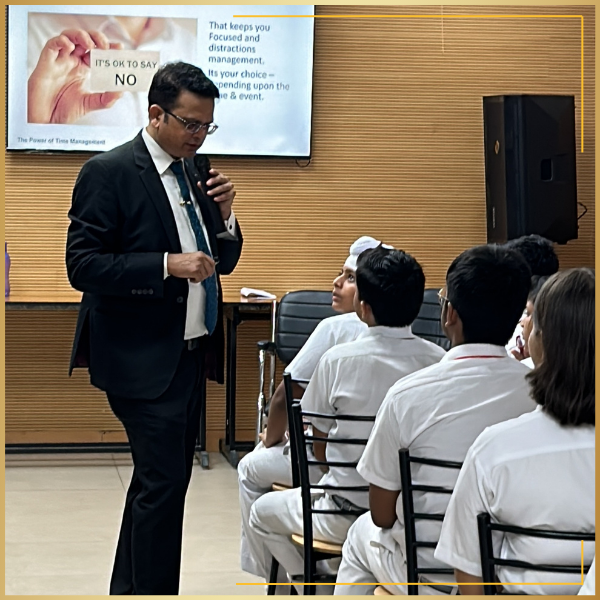
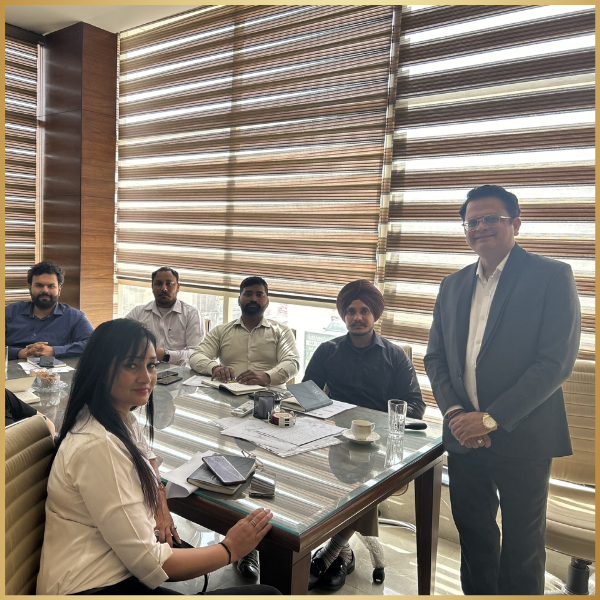
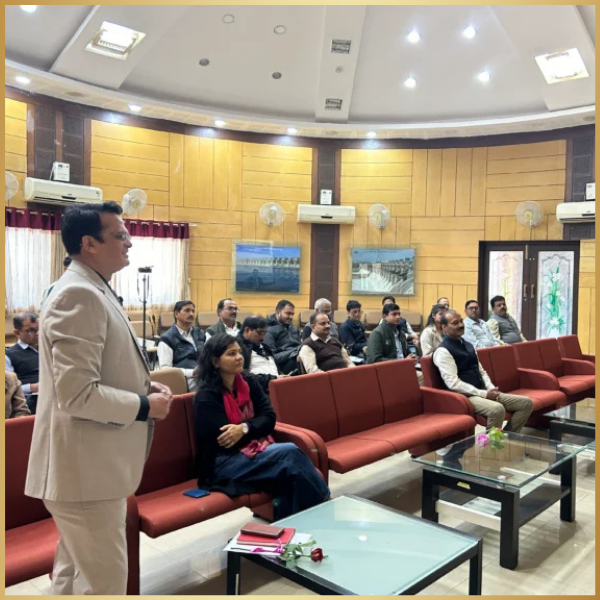
Depending on how you learn best, there are several ways to engage with this work. My webinars are a good starting point if you want a feel for the approach before committing to a full program. The podcast covers real workplace situations and how to navigate them with better soft skill tools. And the blog has deep-dives on specific skills — communication, leadership, confidence, workplace relationships — that you can work through at your own pace. You can also take a look at our training sessions in action to get a sense of how the learning environment actually works.
When you are ready to take it further, reach out directly. I offer a complimentary strategy session for professionals who are serious about making this shift — and we will build a plan around exactly where you are right now.
Your technical skills got you here. Your soft skills will take you the rest of the way.
Accelerate Your Career Growth Today
With over 24+ years of industry and training experience, Sanjeev Bhutani helps university students, corporate teams, and individual professionals across India master critical communication, leadership, and interpersonal soft skills.
Frequently Asked Questions
Q: Can soft skills actually be learned, or are they something you are born with?
They are learned. Introversion is personality. But clear communication, conflict management, and professional confidence are behaviours — and behaviours are trainable. I have seen the shift happen in a single two-day session. It is repeatable.
Q: I perform well but keep getting overlooked for promotions. Where do I start?
Separate performance from visibility. Results are necessary, but the decision-maker also needs to know how you think. Start there — one intentional habit that makes your contribution visible to the right person. My leadership training for employees program is a practical starting point for exactly this.
Q: How long does it take to see real improvement?
Four to six weeks of deliberate, daily practice — not reading, actually doing. Most people feel the difference within the first month.
Q: My workplace has a lot of internal politics. Will soft skills help there?
That is exactly where they matter most. Emotional regulation and the ability to communicate without triggering defensiveness are what keep you above the noise, not inside it.
Q: I am a technical professional. Is this relevant for me?
Especially for you. Technical skill earns you your job. At some point, the technical ceiling appears — and the only way through it is human skill. My leadership development program is built with this exact professional in mind.
Q: How is your training different from reading a book or watching videos?
Knowledge does not change behaviour. Practice does. My workshops and training programs put you in live scenarios — role plays, real feedback, group exercises — where the rewiring actually happens. That is the difference.
Q: Is this suitable for freshers or only experienced professionals?
Both. Freshers build foundational habits early. Experienced professionals break patterns that have been holding them back. The approach is tailored to where you are. See the range of courses available to find the right fit.
Q: What is the single most impactful soft skill to develop first?
Communication — because it amplifies everything else. Start with how to improve communication skills and work outward from there.
Q: Can introverts develop strong soft skills?
Absolutely. Some of the most effective communicators I have trained are introverts. Soft skills do not require you to be loud. They require you to be intentional — and that is accessible to everyone.
Q: How do I know if I am ready for soft skills training?
If you feel stuck despite working hard, if your ideas go unheard, if relationships at work feel harder than they should — you are ready. Get in touch and we will take it from there.
