
10 Workplace Etiquette Tips

Team Management Skills
July 28, 2026
10 Things to Boost Your Confidence
July 28, 202610 Workplace Etiquette Tips – Sanjeev Bhutani
In today’s dynamic modern corporate ecosystem, technical expertise alone is no longer enough to guarantee career advancement and organizational success. Mastering workplace etiquette tips has become an essential pillar for establishing strong professional relationships, maintaining seamless teamwork, and fostering a productive, respectful environment. Whether you are an entry-level employee, a seasoned manager, an HR leader, or an entrepreneur, understanding appropriate workplace behavior shapes how others perceive your professionalism, competence, and reliability.
Applying practical workplace etiquette tips dramatically enhances workplace communication, minimizes unnecessary friction, boosts employee morale, and opens doors to long-term leadership opportunities. Moreover, cultivating standard workplace manners directly influences positive team collaboration and long-term business performance. Recognizing this need for professional conduct, Sanjeev Bhutani offers comprehensive corporate training and soft skills training programs designed to empower individuals and organizations with essential workplace etiquette, strong leadership skills, and refined interpersonal skills. By learning and implementing actionable workplace etiquette tips, professionals at every level can transform their everyday workplace interactions into meaningful pathways for continuous professional development and strategic growth.
What is Workplace Etiquette?
Workplace etiquette refers to the accepted set of social, moral, and professional guidelines that govern human behavior and communication in an office or business setting. It establishes standard office manners, professional conduct, and mutual respect among colleagues, client representatives, and organizational leaders.
Importance of Workplace Etiquette
At its core, workplace etiquette defines office professionalism. It provides a shared framework of expectations that helps individuals interact constructively, irrespective of their diverse backgrounds or individual roles. Following basic employee etiquette minimizes misunderstandings and reinforces workplace ethics.
Why Every Employee Should Follow Workplace Etiquette
Every professional, regardless of rank, must embrace solid workplace etiquette. Observing proper corporate etiquette shows respect for your peers, builds personal credibility, and demonstrates commitment to organizational values. When employees consistently apply workplace etiquette tips, they build strong workplace relationships built on mutual trust.
Benefits for Organizations
For businesses, a strong foundation of employee professionalism directly leads to a positive company culture, lower turnover, higher employee satisfaction, and improved business etiquette standards during client interactions.
Why Workplace Etiquette Matters in Professional Success
Understanding effective workplace etiquette tips is crucial for long-term career growth and organizational performance. Here is why practicing sound workplace etiquette directly fuels professional success:
- Better Communication: Consistent office etiquette ensures clarity, active listening, and thoughtful office communication across all organizational levels.
- Strong Teamwork: Positive workplace behavior facilitates smooth team collaboration, helping diverse team members work toward common goals smoothly.
- Increased Productivity: When colleagues practice proper workplace manners, distractions and unnecessary interpersonal conflicts drop dramatically, boosting overall focus.
- Respectful Work Environment: Applying workplace ethics fosters a positive work environment where every employee feels valued and respected.
- Better Client Relationships: External stakeholders notice employee professionalism instantly, leading to higher confidence, client retention, and improved corporate reputation.
- Career Advancement: Leaders like Sanjeev Bhutani emphasize that professionals who master business etiquette and leadership skills consistently stand out for executive promotions.
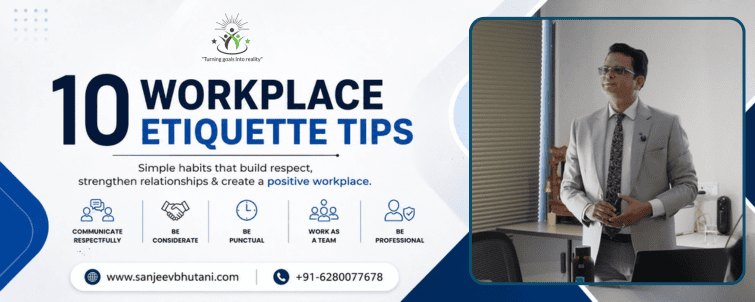
10 Workplace Etiquette Tips
Here are ten essential workplace etiquette tips every professional should implement daily to elevate their office conduct and personal brand.
1. Be Punctual
Punctuality is one of the most foundational workplace etiquette tips. Arriving on time for work, team meetings, and scheduled appointments demonstrates respect for your colleagues’ time and demonstrates high workplace professionalism.
- Practical Workplace Example: Arriving 5 minutes prior to a client presentation to set up technology and review agenda notes.
- Benefits: Establishes reliability, reduces team stress, and sets a standard of operational excellence.
- Best Practices: Set reminders, prepare materials ahead of time, and notify attendees immediately if an unexpected delay arises.
- Advice from Sanjeev Bhutani: Sanjeev Bhutani emphasizes that punctuality is the ultimate reflection of self-discipline and professional commitment.
2. Communicate Respectfully
Clear and respectful communication forms the backbone of essential workplace etiquette tips. Using polite language, appropriate tone, and constructive delivery prevents unnecessary friction.
- Practical Workplace Example: Offering constructive feedback during peer reviews using empathetic, constructive language rather than critical terms.
- Benefits: Enhances team trust, minimizes misunderstandings, and encourages open workplace communication.
- Best Practices: Use “I” statements, maintain neutral body language, and choose appropriate channels for sensitive discussions.
- Advice from Sanjeev Bhutani: Professional behavior expert Sanjeev Bhutani advises that gentle tone combined with direct clarity builds powerful professional relationships.
3. Dress Professionally
Adhering to your organization’s dress code is a classic example of standard workplace etiquette tips. Your attire reflects your respect for the corporate environment and your role within it.
- Practical Workplace Example: Wearing business casual attire that aligns strictly with your company’s published brand guidelines.
- Benefits: Projecting confidence, building instant trust with clients, and promoting professional standards.
- Best Practices: Observe company culture, dress neatly, and err on the side of understated professional attire during client engagements.
- Advice from Sanjeev Bhutani: Executive coach Sanjeev Bhutani highlights that professional appearance creates an immediate, lasting positive impression.
4. Practice Active Listening
Active listening is one of the most impactful workplace etiquette tips for managers and team members alike. It involves giving your full attention to the speaker without interrupting.
- Practical Workplace Example: Putting your phone face down during one-on-one check-ins and taking thoughtful notes.
- Benefits: Reduces operational errors, enhances team collaboration, and validates the speaker’s thoughts.
- Best Practices: Maintain eye contact, nod to acknowledge understanding, and summarize key takeaways before responding.
- Advice from Sanjeev Bhutani: In his leadership training workshops, Sanjeev Bhutani teaches that great leaders always listen to understand rather than simply to reply.
5. Respect Everyone at Work
Treating all colleagues—regardless of title, department, or seniority—with equal respect is a non-negotiable component of essential workplace etiquette tips.
- Practical Workplace Example: Greeting support staff, junior interns, and senior executives with the same warm professional courtesy.
- Benefits: Promotes an inclusive workplace culture, reduces hierarchy friction, and boosts overall employee morale.
- Best Practices: Value diverse perspectives, avoid dismissive language, and acknowledge everyone’s unique contributions.
- Advice from Sanjeev Bhutani: Workplace behavior expert Sanjeev Bhutani stresses that respect forms the foundational cornerstone of long-term organizational health.
6. Maintain Professional Email Etiquette
Digital communication requires adherence to targeted workplace etiquette tips. Clear subject lines, concise text, and professional greetings safeguard digital workplace standards.
- Practical Workplace Example: Using clear subject headers like “Project Status Update: May 15” and avoiding late-night, non-urgent mass emails.
- Benefits: Prevents email fatigue, speeds up response times, and keeps official records clear and searchable.
- Best Practices: Proofread before sending, use CC thoughtfully, and maintain a polite professional tone across all threads.
- Advice from Sanjeev Bhutani: Sanjeev Bhutani recommends reviewing every email through the receiver’s lens prior to clicking send.
7. Keep Your Workspace Organized
Maintaining a clean, orderly workspace is among the most overlooked workplace etiquette tips. Physical clutter can visually distract peers and reflect poorly on your attention to detail.
- Practical Workplace Example: Clearing personal clutter, managing confidential papers, and keeping shared desk areas tidy.
- Benefits: Increases mental clarity, reduces visual distractions for peers, and maintains data privacy standards.
- Best Practices: Sanitize shared workstations, organize digital desktop folders, and keep personal items tasteful and minimal.
- Advice from Sanjeev Bhutani: Corporate trainer Sanjeev Bhutani notes that an organized desk reflects an organized, focused mind.
8. Be a Team Player
Collaborative spirit is high on the list of practical workplace etiquette tips. Being a reliable team member who shares credit and supports colleagues drives holistic business results.
- Practical Workplace Example: Stepping in to assist a colleague during peak project deadlines without expecting immediate public praise.
- Benefits: Fosters deep trust, improves team productivity, and builds lasting professional camaraderie.
- Best Practices: Share knowledge freely, celebrate team wins publicly, and fulfill your individual commitments reliably.
- Advice from Sanjeev Bhutani: Sanjeev Bhutani reinforces that individual brilliance shines brightest when aligned with collaborative team achievements.
9. Handle Conflicts Professionally
Disagreements are natural, but handling them gracefully relies on effective workplace etiquette tips. Addressing issues privately and calmly preserves team integrity.
- Practical Workplace Example: Requesting a private discussion to clarify a misunderstanding regarding project ownership rather than engaging in public confrontation.
- Benefits: Solves problems efficiently, maintains workplace ethics, and prevents toxic office drama.
- Best Practices: Focus on the problem rather than the person, remain calm, and seek win-win solutions collaboratively.
- Advice from Sanjeev Bhutani: Leadership consultant Sanjeev Bhutani emphasizes that emotional intelligence is key to navigating corporate conflict successfully.
10. Continue Learning and Improving
Commitment to personal growth completes our vital workplace etiquette tips. Receptivity to feedback and continuous soft skills development ensures long-term professional development.
- Practical Workplace Example: Actively seeking performance feedback following a major project launch and applying suggestions directly to future tasks.
- Benefits: Accelerates career growth, enhances personal agility, and keeps skills aligned with evolving industry trends.
- Best Practices: Attend professional development workshops, seek mentorship, and practice regular self-reflection.
- Advice from Sanjeev Bhutani: Mentor Sanjeev Bhutani reminds professionals that lifelong learning is the definitive hallmark of true industry leaders.
Common Workplace Etiquette Mistakes to Avoid
Even well-intentioned professionals can make mistakes when neglecting foundational workplace etiquette tips. Avoiding these frequent missteps protects your professional reputation:
- Arriving Late: Frequently showing up late signals a lack of organization and disrespect for others’ schedules.
- Gossiping: Spreading office rumors destroys interpersonal trust and creates a toxic work environment.
- Interrupting Others: Cutting colleagues off during discussions signals poor interpersonal skills and disrespect.
- Ignoring Emails: Delaying important responses harms team velocity and project timelines.
- Poor Communication: Vague updates or failure to inform stakeholders creates costly project delays.
- Mobile Phone Distractions: Checking mobile phones during meetings demonstrates a clear lack of active listening and engagement.
- Disrespectful Behavior: Using sharp, sarcastic, or dismissive language damages team morale and professional relationships.
- Missing Deadlines: Failing to manage time effectively undermines employee professionalism and team dependency.
- Negative Attitude: Persistent complaining spreads negativity across the office culture.
- Lack of Accountability: Blaming others for mistakes damages personal credibility and leadership potential.
Benefits of Following Workplace Etiquette
When individuals and teams consistently practice proven workplace etiquette tips, the organizational impact is immediate and far-reaching:
- Better Teamwork: Teams operating with clear workplace manners experience less conflict and smoother workflows.
- Strong Leadership: Applying high business etiquette standards elevates manager credibility and leadership skills.
- Improved Productivity: Efficient office communication and clean habits remove daily friction, increasing focus.
- Higher Employee Satisfaction: Respectful, psychological safety-rich environments raise job satisfaction and retain top talent.
- Career Growth: Professionals who integrate these workplace etiquette tips gain faster recognition, promotions, and expanded responsibilities.
- Positive Company Culture: Organizational commitment to workplace ethics cultivates a vibrant, high-performing corporate culture.
- Better Customer Relationships: External clients appreciate professional conduct, leading to long-term trust and loyalty.
- Increased Trust: Transparency and mutual respect build unbreakable trust between leadership and employees.
How Sanjeev Bhutani Helps Professionals Improve Workplace Etiquette
Developing and sustaining executive-level workplace etiquette requires expert guidance, structured coaching, and customized training programs. Sanjeev Bhutani is a renowned corporate trainer, executive coach, and leadership development expert dedicated to transforming individual potential into organizational excellence. Through specialized learning interventions, Sanjeev Bhutani empowers organizations to build high-performance cultures anchored in professional behavior and soft skills mastery.
Key Offerings by Sanjeev Bhutani:
- Corporate Training: Comprehensive training sessions tailored to elevate team professionalism, business etiquette, and corporate culture.
- Leadership Development: High-impact programs designed to refine executive leadership skills, decision-making, and workplace behavior.
- Communication Skills Workshops: Actionable sessions focusing on office communication, active listening, and public speaking.
- Team Management Programs: Practical strategies for managers to foster high-performing team collaboration and mutual respect.
- Professional Development Coaching: One-on-one coaching helping professionals master targeted workplace etiquette tips and advance their careers.
- Employee Engagement Initiatives: Programs designed to foster positive work environments and boost employee satisfaction.
- Executive Coaching: Specialized mentoring for senior leaders to enhance executive presence and interpersonal skills.
- Workplace Behavior Training: Customized workshops addressing workplace ethics, conflict resolution, and positive office manners.
- Organizational Development: Strategic consulting to build sustainable, value-driven corporate cultures across modern organizations.
- Soft Skills Training: Targeted training modules enhancing critical soft skills needed in today’s global business environment.
By partnering with Sanjeev Bhutani, companies and professionals gain access to proven methodologies that integrate essential workplace etiquette tips into daily workplace practice seamlessly.
Frequently Asked Questions (FAQs)
1. What are the most essential workplace etiquette tips for remote and hybrid teams?
In remote or hybrid settings, essential workplace etiquette tips include keeping your camera on during key meetings, muting your microphone when not speaking, maintaining prompt responsiveness during office hours, and being mindful of time zones when scheduling discussions. Respecting digital boundaries and maintaining clear email communication are equally vital.
2. How does observing good workplace etiquette influence career advancement?
Consistently applying workplace etiquette tips builds your reputation as a reliable, empathetic, and professional individual. Senior executives and HR leaders actively look for high emotional intelligence, active listening, and strong interpersonal skills when evaluating team members for leadership roles and strategic promotions.
3. How should an employee handle a colleague who frequently breaks workplace etiquette rules?
Address the situation professionally and calmly. If the behavior directly affects your work, consider having a private, polite conversation focusing on project outcomes. If the behavior persists or compromises workplace ethics, consult your HR department or supervisor for appropriate corporate guidance.
4. What is the difference between soft skills and workplace etiquette?
Soft skills represent broad interpersonal attributes such as adaptability, problem-solving, and emotional intelligence. Workplace etiquette refers specifically to the actionable rules, manners, and professional behaviors that demonstrate those soft skills in daily business interactions.
5. How can Sanjeev Bhutani customize workplace etiquette training for our organization?
Sanjeev Bhutani conducts thorough organizational assessments to design tailored corporate training and leadership development modules aligned with your company’s culture, industry standards, and specific operational challenges.
Conclusion
Mastering workplace etiquette tips is essential for anyone striving to build a successful, meaningful career or build a thriving corporate culture. From basic punctuality and respectful communication to active listening and conflict resolution, applying these ten core practices creates a productive, harmonious work environment where everyone thrives. Good office etiquette is not merely about rules—it is about honoring human relationships and fostering long-term professional success.
If you are ready to elevate your team’s employee professionalism, leadership skills, and workplace communication, expert guidance is available. Sanjeev Bhutani offers world-class corporate training, soft skills training, and professional development programs tailored to your organization’s unique needs.
Take the next step in your professional journey today! Connect with Sanjeev Bhutani to transform your organizational culture, develop strong leaders, and empower your workforce with winning workplace etiquette tips and essential corporate skills.
